
Phantom Blade Zero Beginner Guide: Combat, Difficulty & Your First Hours
A pre-launch beginner guide to Phantom Blade Zero: how wuxia combat works, which of the four difficulties to pick, and what to prioritize in your first five hours.
What Is Phantom Blade Zero?
Phantom Blade Zero is a wuxia action RPG developed by S-GAME, a Beijing studio led by Soulframe Liang, the creator of the cult Rain Blood series. It runs on Unreal Engine 5, features action direction by Kenji Tanigaki, and launches October 29, 2026 on PS5 and PC (Steam and Epic Games Store). PS5 is a 12-month timed console exclusive, and an Xbox version has not been announced.
You play as Soul, an elite assassin known as the Ordinator. He is framed, left for dead, and brought back — but the rescue buys him exactly 66 days of life. That countdown is the engine of the story and, on the hardest difficulty, of the gameplay itself.
The most important thing a new player should understand is what this game is not. Despite years of “Soulslike” labels in comment sections, Phantom Blade Zero is a cinematic, combo-driven action RPG. It does borrow structural ideas — checkpointed zones, multi-phase bosses, aggressive melee spacing — but the pace is closer to a character-action game wearing wuxia robes. You can also pick a difficulty that fits your skill level from the start, which no traditional Soulslike allows.
The project also matters beyond its genre. S-GAME is one of the few Chinese studios building a large-budget console action game for a worldwide audience — more than half of the game’s wishlists come from outside China — and Liang’s Rain Blood roots mean the writing leans on guilt, memory, and mortality rather than chosen-one fantasy. For a first-time player, none of that background is required reading; it simply explains why the tone of the opening hours is closer to a revenge tragedy than a power fantasy.
Which Difficulty Should You Choose?
Phantom Blade Zero ships with four announced difficulty modes. Choose based on what you want from the first run, not on bragging rights — previews indicate the harder tiers genuinely change enemy behavior.
| Difficulty | What it changes | Best for |
|---|---|---|
| Wayfarer | Most forgiving, story-focused experience | Players who want the plot and spectacle |
| Pathbreaker | The standard balanced mode | Most players on a first run |
| Hellwalker | Reshuffled enemy movesets, smarter and more aggressive AI — not just inflated health bars | Action-game veterans |
| 66 Days | Hellwalker rules plus permadeath: Soul has 66 days, and every death permanently burns one | One-run challenge players |
Two caveats while the game is still pre-launch. First, whether Hellwalker is available from the start or tied to New Game Plus has not been finalized in official materials. Second, it is unconfirmed whether you can switch difficulty mid-playthrough. If you are unsure, start on Pathbreaker: it is tuned as the intended experience.
The Combat Loop: Main Weapons and Phantom Edges
The combat system is built on a two-layer weapon structure: 30 main weapons (swords, sabers, spears, gauntlets, heavy arms) paired with 25 off-hand Phantom Edges, for 55 weapons total. Main weapons carry your light and heavy chains; Phantom Edges are special attacks and tools you weave into those chains — including signature weapons taken from bosses you defeat. Swapping between the two layers mid-combo is the core skill the game asks you to learn, and every weapon has its own skill tree to develop.
Reading enemy attacks is the second half of the loop. Demo coverage describes two families of danger cues:
| Attack type | What it does | Correct response |
|---|---|---|
| Brutal attacks | Heavy strikes that heavily drain your resources (previews reference a “Sha-Chi” gauge) if you block them | Parry or dodge instead of blocking |
| Killer moves | Cannot be blocked or parried at all | Dodge — nothing else works |
Every enemy telegraphs these with distinct color-coded cues. Training your eyes on that telegraph language early will do more for your survival than any build choice, because it applies to every fight in the game.
Defense, meanwhile, is a three-option system: block, parry, and dodge. Blocking is the safety net but the most expensive one against brutal attacks, which is exactly why the game labels them for you. Parries appear tuned as the reward play — tighter timing in exchange for a punish window — while dodging is your only answer to killer moves. If you are arriving from Soulslike habits, resist the instinct to block by default; Phantom Blade Zero wants you reading the cue first and choosing the response second.
Between fights, the same toolkit handles traversal and stealth: you can swing from ropes, run along walls, drop from above, and stealth-kill unaware enemies. S-GAME has shown the game expects you to blend movement, stealth, and open combat rather than picking one lane. Unaware enemies can be removed outright with a stealth kill, which makes scouting a camp before committing to open combat a legitimate strategy rather than a cheese — expect the level design to reward players who look for rope anchors and high ground before drawing steel.
Your First Five Hours: A Suggested Plan
| Time | Focus | Why it matters |
|---|---|---|
| Hour 0–1 | Learn the cue language on trash enemies | Brutal vs. killer recognition pays off in every later fight |
| Hour 1–2 | Try at least two main weapon families | Early commitment is safe — the Reforge Talisman refunds materials when you respec |
| Hour 2–3 | Push the first boss with phase checkpoints in mind | Dying in phase 2 restarts you at phase 2, so late phases are where you practice |
| Hour 3–4 | Spend skill tree points on one combo route | Spreading points thin across five weapons weakens your first clear |
| Hour 4–5 | Chase side content and the boss-rematch system | Previews describe a rematch mode with hidden bosses beyond the story path |
One habit worth forming immediately: after each boss kill, check what signature weapon you claimed. Boss weapons in Phantom Blade Zero double as both combat specials and exploration tools — the Bashpole hammer shown in early demos smashes weakened walls and floors to open hidden paths. Claiming them costs no in-game currency, so there is no reason to skip a boss once you have found one, even an optional one.
A word on pacing expectations for those first five hours: the director has said the fights shown publicly so far, including the Coppermaul and Chief Disciple encounters, come from side content attached to a single optional questline. In other words, what previews framed as “early bosses” may not be on the critical path at all. Treat your first hours as a systems tutorial rather than a race — the story bosses are being kept secret for launch, and they will assume you know the cue language cold.
What You Can Prepare Before Launch
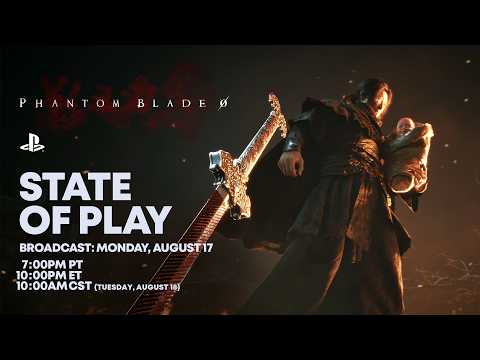
The game releases October 29, 2026. Before then you can: wishlist it on Steam for the release notification, watch the State of Play deep-dive (embedded below) to absorb the combat pacing, and decide between the $59.99 standard edition and the $69.99 Deluxe, which bundles the Blood-Steel Form cosmetic, an art book, and the soundtrack. None of the Deluxe content is gameplay power, so there is no wrong answer.
S-GAME has also confirmed PC support for ray tracing and DLSS 4, so PC players should budget an afternoon for driver updates and settings tuning on day one. If you are undecided on platform, note that PS5 is a 12-month timed console exclusive and the PC version launches the same day, so the choice is genuinely open — performance comparisons will follow once both builds are testable at launch.
Updated at Launch — October 29
This is a pre-launch edition of this guide, written from officially announced information and playable-demo coverage. On October 29, 2026 we will rewrite it with hands-on data: confirmed difficulty-switching rules, Hellwalker unlock requirements, verified first-boss strategies, and a tested first-five-hours route. The URL of this page will not change — bookmark it now and it will be current on launch day.
Frequently Asked Questions
▸ Is Phantom Blade Zero a Soulslike?
Not really. It borrows structural ideas from Souls games, such as checkpoint-based progression and multi-phase boss fights, but the combat is faster, combo-driven, and more cinematic. Director Soulframe Liang has described it as a wuxia action RPG first. There is also a full four-tier difficulty system, which traditional Soulslikes avoid.
▸ Which difficulty should a beginner choose in Phantom Blade Zero?
Pathbreaker, the standard difficulty. It is balanced for a first playthrough and lets you learn the parry, dodge, and weapon-swap systems without the pressure of Hellwalker. If you mainly want the story, Wayfarer is the most forgiving option. Save Hellwalker and the permadeath 66 Days mode for a later run.
▸ How long is Phantom Blade Zero?
The main story is expected to run 20 to 30 hours, with roughly 40 to 50 hours to clear the full game including side content. These are pre-launch official estimates, so real completion times may differ after release.
▸ What platforms is Phantom Blade Zero on, and when does it release?
Phantom Blade Zero launches October 29, 2026 on PlayStation 5 and PC via Steam and the Epic Games Store. PS5 is a 12-month timed console exclusive; an Xbox version has not been announced. Pricing is $59.99 standard and $69.99 Deluxe.
▸ What are Phantom Edges in Phantom Blade Zero?
Phantom Edges are the 25 off-hand weapons — hidden blades, projectiles, and tools such as boss weapons you claim by defeating their owners. You equip one alongside each of the 30 main weapons and weave its special attacks into your combos, for 55 weapons in total.
Related videos

Was this helpful?
Thanks for the feedback!